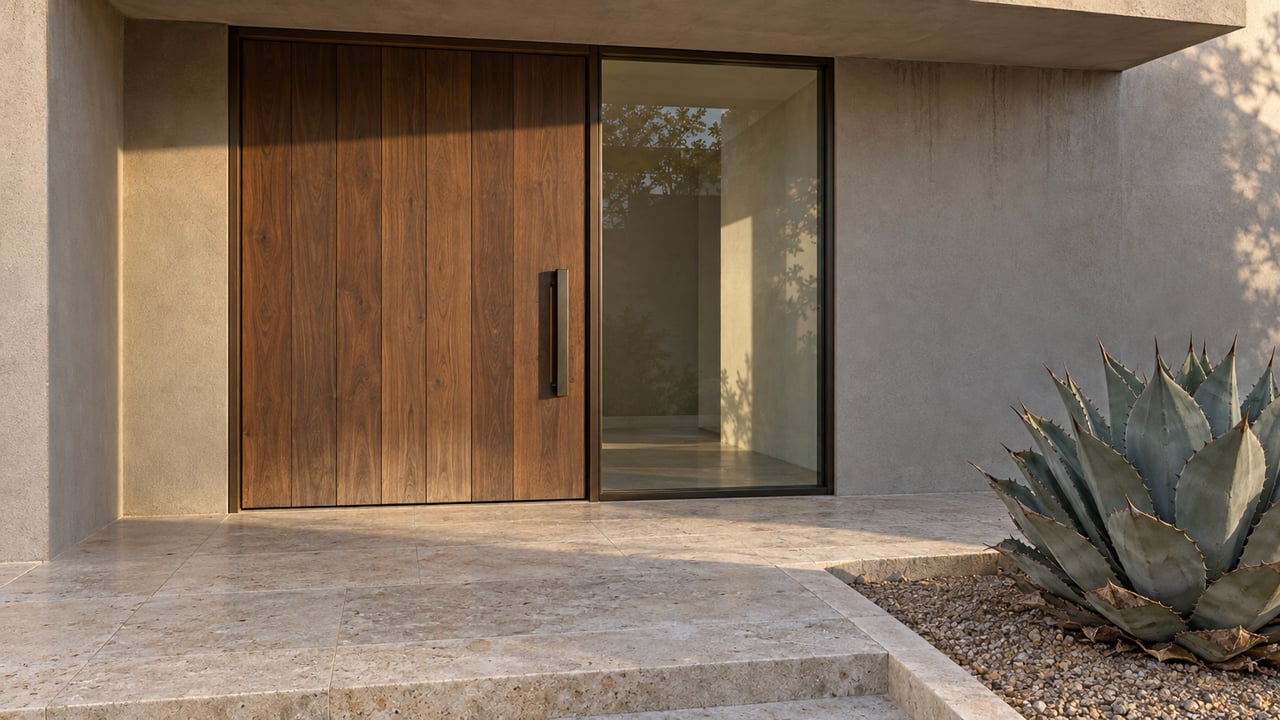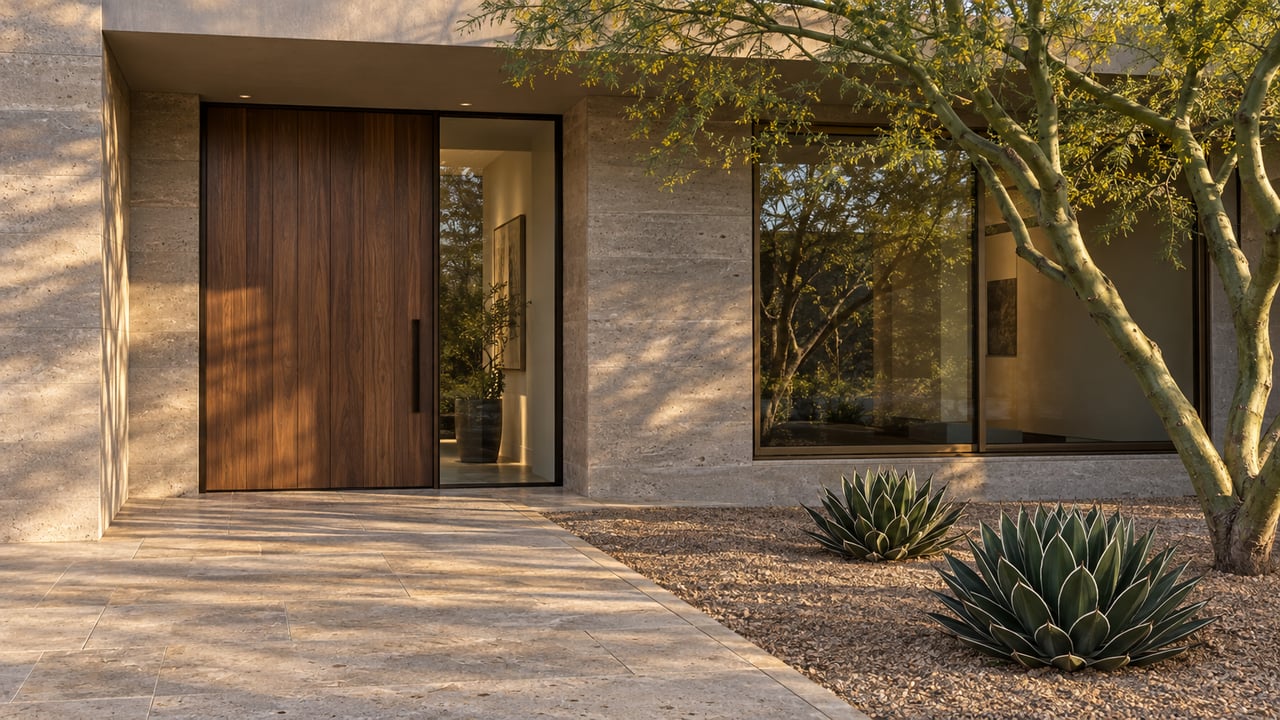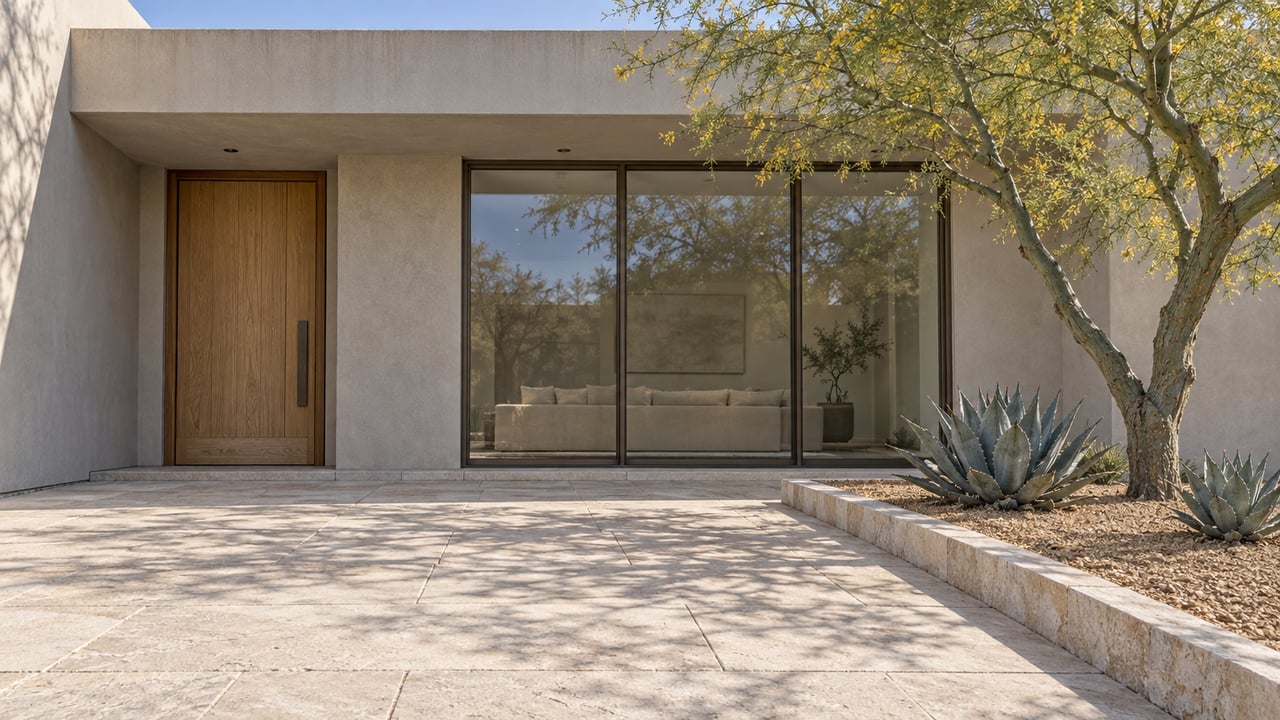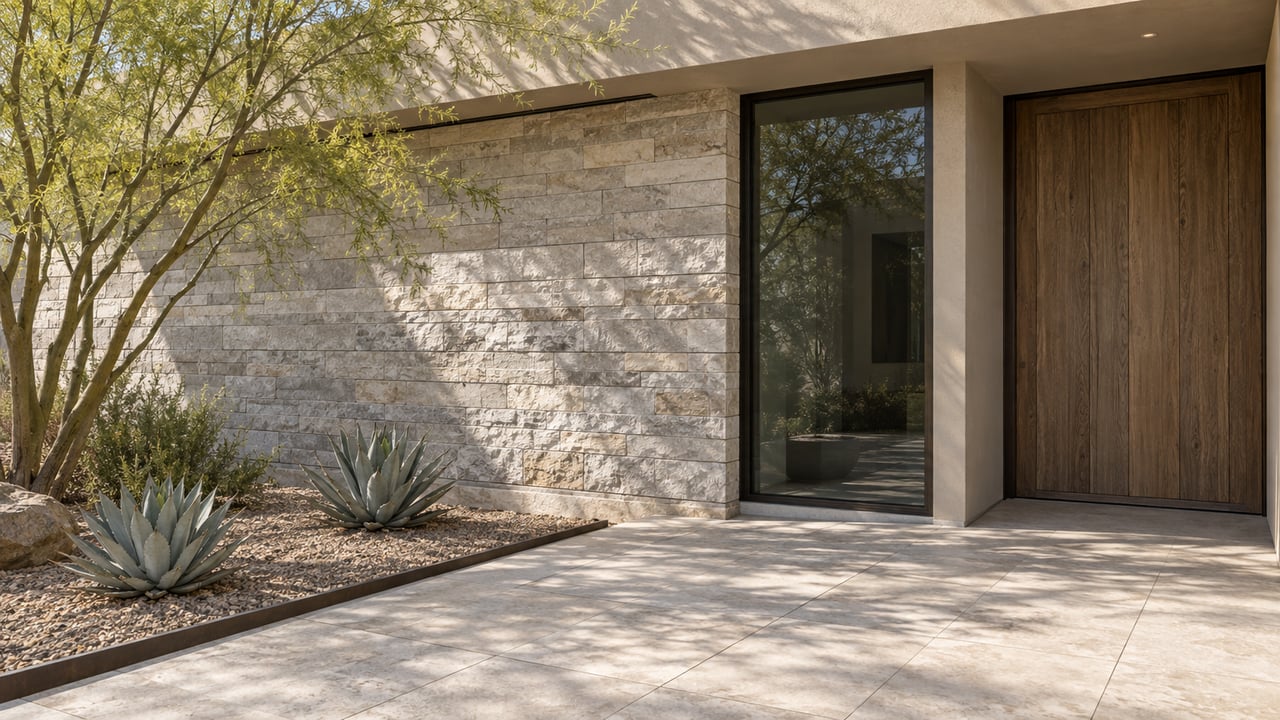
Drive east on Indian School Road from 44th Street toward 68th and the scenery does not change much. Same citrus trees dropping fruit on the sidewalk. Same low ranch rooflines behind mature landscaping. Same slice of Camelback Mountain rising over the block. Then somewhere past 56th Street, without a sign, a gate, or a change in pavement, the same house that just sold for $400,000 a mile back starts selling for four times that.
That line is not zoning. It is not school assignment, though school assignment plays a role. It is a name, and in 2026 that name is doing more pricing work in this corner of Phoenix than the lot underneath it.
The Ten-Minute Line That Cuts a Home's Value by Four
Start with the plainest version of the gap. As of August 2026, Redfin's three-month window ending in July put Arcadia's median sale price at $1.7 million, up 16.1 percent from the same period a year earlier, with homes averaging 69 days on market and 92 sales closing that month, up from 68 the year before. That is a neighborhood absorbing price growth at a pace most of Phoenix has not seen since before rates rose.
Ten minutes south and west, in the adjacent ZIP code 85008, Zillow's estimate for typical home values sat at $378,780 as of June 2026, down 1.1 percent year over year, with 63.5 percent of that month's sales closing below asking price. Same canal system. Similar citrus-lined streets. In places, a comparable view of the mountain. A buyer priced out of Arcadia by roughly a million dollars can find a physically similar house one ZIP code over and negotiate on top of the discount.
That comparison is the whole thesis in miniature. The Arcadia premium is not primarily a payment for square footage, lot irrigation, or proximity to the mountain. Those things exist a few blocks away for a fraction of the price. The name and its informal boundaries can help explain the difference between nearby markets.
How Arcadia's Informal Boundaries Shape Its Name
The boundaries inside Arcadia are contested even among people who live there. Arcadia Proper is generally described as running from 44th Street to 68th Street, Camelback Road to Indian School Road, the original citrus-grove tract platted in the early 1900s. West of that, from 32nd Street to 44th Street between Camelback and Indian School, sits what locals call Arcadia Lite, a pocket of smaller 1950s and 1960s ranch homes that trade at a meaningful discount to Proper while still carrying the Arcadia name. South of Indian School, roughly 44th to 56th Street down to Thomas Road, is Lower Arcadia, older and more modest again.
None of these three names are official Phoenix planning designations. The Arcadia Lite Neighborhood Association was established in 2007 and represents roughly 250 homes. The boundaries are informal, and their precise edges remain disputed.
These informal boundaries help explain why definitions of Arcadia can differ from one block to the next. Like a vintner's appellation boundary, the name can signal a particular area, even as its edges remain disputed.
One Median, Four Different Houses
Even within the boundary that everyone agrees on, the word "Arcadia" is doing too much work for a single median price to describe. A market report covering June 2026 closings in ZIP 85018, the most recent complete month available as of this writing, put the median sale price at $1,545,000 across 79 transactions, but broke that median into four distinct product tiers that behave almost like separate markets sharing a mailing address.
| Tier | Price range | What you're buying |
|---|---|---|
| Original-condition entry | $920,000 to $1.35 million | Largely Arcadia Lite, west of 56th Street, unrenovated |
| Renovated core | $1.35 million to $2.55 million | Updated kitchens and baths on quarter-acre irrigated lots |
| Tear-down rebuild | $2.55 million to $4.55 million | Custom new construction, transitional and modern styles |
| Trophy estate | $4.55 million and up | Large Arcadia Proper lots, mountain views, pool and guest-house programs |
Price per square foot across the ZIP averaged $618 that month. Cash purchases made up roughly 34 percent of Arcadia transactions, well above Phoenix's citywide rate of 18 percent, a sign that a meaningful share of buyers here are not financing at all and are less sensitive to the rate environment shaping the rest of the metro.
A buyer who only anchors to the median before touring homes will misjudge nearly everything they see. A house at the bottom of the original-condition tier and a house at the top of the trophy tier can sit three streets apart and share nothing but a ZIP code.
Understanding which tier a specific block belongs to matters more than knowing the neighborhood median, because that median is a snapshot of four markets that do not otherwise talk to each other.
The Number That Isn't What It Looks Like
Here is where a headline stat can mislead a careful buyer if taken at face value. Redfin's data for the three months ending in March 2026 showed Arcadia Lite's median sale price up 92.9 percent year over year, reaching $1.4 million, on 37 recorded sales, down from 41 the year before.
A 93 percent jump sounds like a neighborhood catching fire. Read the sample size instead. Thirty-seven sales is a small enough pool that one or two high-end teardown rebuilds or trophy-tier closings, the kind that already run $2.5 million and up per the tier breakdown above, can drag the entire median upward without reflecting anything about the broader Arcadia Lite market. The same June 2026 report on 85018 explicitly warns that monthly volume is small enough for a single trophy transaction to move the print, which is the correct way to read this figure. It is not evidence that entry-level Arcadia Lite ranches doubled in value. It is evidence that a handful of unusually expensive sales landed in the same three-month window.
The lesson generalizes past this one number. In a submarket this small, any month's headline percentage deserves a look at the sale count behind it before it changes how you think about pricing your own offer.
What the Name Buys You Beyond the Dirt
Two more mechanisms sit underneath the price line, and both explain why some buyers pay it without hesitation.
The first is school access. Much of Arcadia Lite sits outside the Scottsdale Unified School District boundary, yet many families there still send children to Scottsdale schools, including Hopi Elementary, Ingleside Middle School, and Arcadia High School, through open enrollment. That access is a policy detail, not a guarantee, and enrollment availability changes year to year and school to school. Buyers who assume an address inside the Arcadia name automatically secures a Scottsdale Unified seat should confirm current open enrollment status directly with the district before treating it as settled.
The second is transaction behavior. Sale-to-list ratio across Arcadia's closed inventory has run around 95.1 percent, with renovated homes commonly trading within 2 percent of list price. That tightness is itself a signal buyers price in. A market where sellers rarely have to negotiate far from their number tells a buyer that competition, not just amenities, is baked into the price they are offering against.
Before You Compare Zip Codes
A few things worth confirming before an offer goes in on anything carrying the Arcadia name:
- Ask which of the three informal zones, Proper, Lite, or Lower, the specific street falls into, since pricing tiers track these lines more closely than they track the ZIP code alone.
- Confirm current school open enrollment status directly with Scottsdale Unified rather than assuming a listing description guarantees a seat.
- Pull the trailing 12-month sales count for the specific tier you're shopping, not just the three-month median, since small sample sizes can swing a single quarter's number.
- If the budget does not stretch to Arcadia's price floor, walk the adjacent blocks in 85008 before ruling out the area entirely. The physical setting can be closer than the price tag suggests.
FAQ
Is Arcadia Lite officially part of Arcadia? There is no single governing map. Arcadia Lite, Arcadia Proper, and Lower Arcadia are informal neighborhood names rather than city planning designations, and their precise boundaries remain disputed even among people who live inside them.
Why did Arcadia Lite's median price jump nearly 93 percent in one recorded quarter? The three-month window in question covered only 37 sales. A pool that small can be pulled sharply upward by a small number of high-tier transactions, so the percentage reflects which specific homes closed that quarter more than it reflects a broad shift in Arcadia Lite values.
If I buy in 85008 instead of Arcadia, can my kids still attend Scottsdale schools? Open enrollment policies are set by the district and can change by school and by year. Anyone considering this should confirm current availability directly with Scottsdale Unified rather than relying on a neighborhood's general reputation for access.
If you are weighing an Arcadia address against its neighbors, or trying to figure out which tier of that market actually fits your budget and your priorities, Neighbors Luxury spends its time in exactly these blocks. Reach out and we will walk the boundary lines with you before you write an offer, not after.